
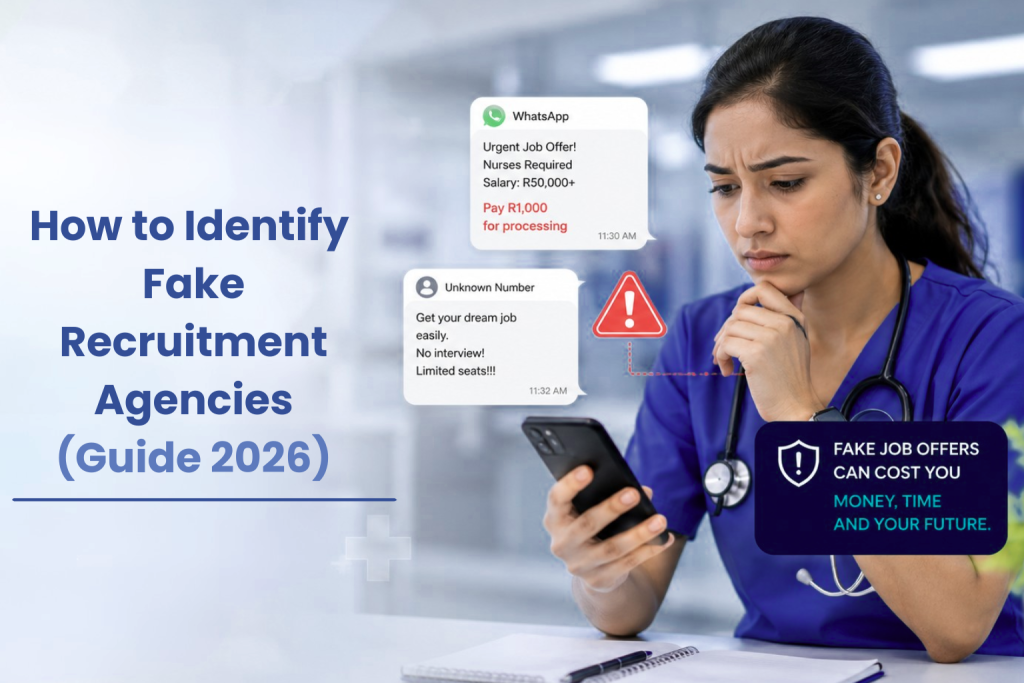
How to Identify Fake Recruitment Agencies in Healthcare (2026 Guide)
Fake recruitment scams targeting healthcare professionals are on the rise, particularly on WhatsApp and social media. Nurses, caregivers, emergency care staff, porters, security personnel and administrative workers are often the primary targets.
These scams can lead to financial loss, identity theft, and missed genuine job opportunities.
Here’s how to stay protected.
Why Healthcare Professionals Are Targeted
Healthcare remains one of the most in-demand sectors, creating high pressure and urgency among job seekers.
Fraudsters take advantage of:
• Urgency to secure employment quickly
• Limited knowledge of recruitment processes
• Trust in “official-looking” job advertisements
Top Signs of a Fake Recruitment Agency
1. Requests for Upfront Payments
Be cautious if you are asked to pay for:
• Medical certificates
• Police clearance
• Background checks
• “Application” or registration fees
Legitimate employers and recruitment agencies will never request payment to apply or secure an interview.
2. Guaranteed Job Offers
No legitimate recruiter can guarantee:
• Immediate placement
• Employment without interviews
• Fast-tracked hiring without checks
If it’s guaranteed, it’s likely fake.
3. Poor or Missing Verification Process
A proper recruitment process always includes:
• Document verification
• Reference checks
• Formal application steps
If these are skipped or ignored, proceed with caution.
4. Suspicious Communication Channels
Red flags include:
• Only mobile numbers provided
• Informal messaging apps used for official communication
• Unprofessional or inconsistent email addresses
5. Fake or Unverifiable Job Offers
Always verify:
• Employer details
• Official contact information
• Job descriptions through trusted channels
Scammers often use altered or imitation organisation names.
6. Pressure to Act Immediately
Be wary of urgency tactics such as:
• “Limited positions available”
• “Apply today or miss out”
• Demands for immediate payment or documentation
Real opportunities do not rely on pressure tactics.
How to Protect Yourself
Before engaging with any opportunity:
✔ Verify vacancies through official sources
✔ Confirm recruiter or employer details independently
✔ Never send money for recruitment purposes
✔ Ask for written confirmation of any offer
✔ Report suspicious activity immediately
Why Ethical Recruitment Matters
Choosing the right guidance is critical when navigating healthcare career opportunities.
Ethical recruitment ensures:
- Transparent processes
- Genuine job opportunities
- Proper documentation support
- No illegal or hidden charges
Many doctors, nurses and healthcare professionals today prefer working with trusted agencies that are Members of AHASA, which focus on verified opportunities and ethical recruitment practices, helping candidates avoid unnecessary risks.
If it feels rushed, unclear or requires payment upfront — it is most likely a scam.
Stay alert, stay informed, and protect your professional identity.
This article was written by AHASA, an industry body for healthcare recruitment companies. For more information contact info@ahasa.org or visit our member network: https://ahasa.org/ahasa-members-list/